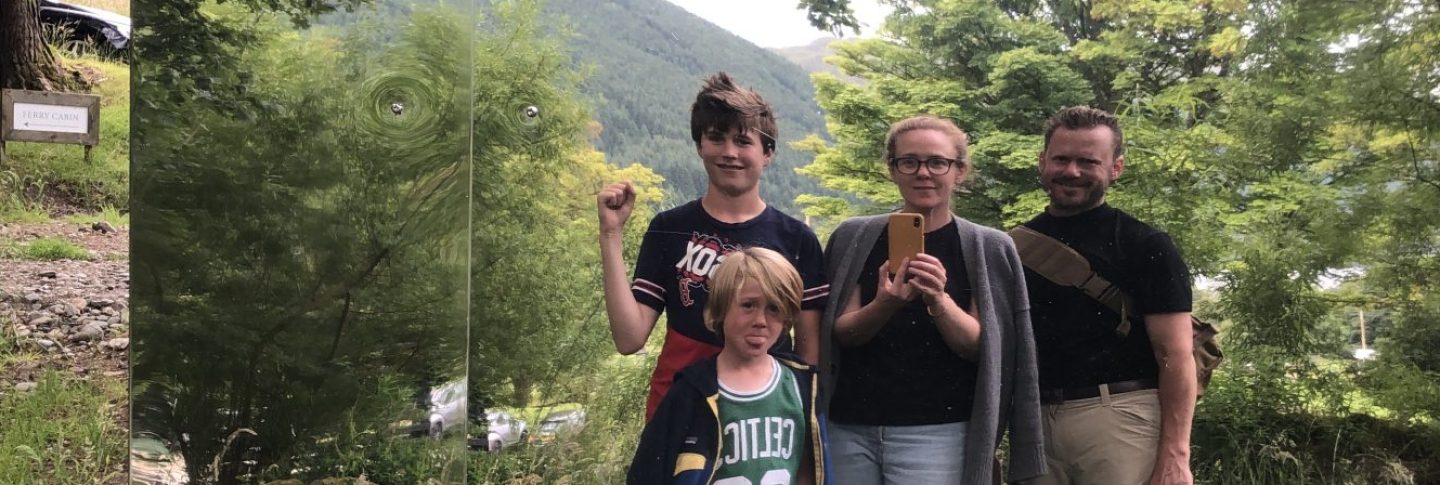
Nestled in the heart of Killarney National Park, Innisfallen Island is a magical blend of Irish legend, medieval history and off-the-beaten-path discovery. The island on Lough Leane—the largest of Killarney’s three lakes—has been a sanctuary of learning, faith and mystery for eons (that’s centuries to you and me). Reaching it means first conquering the Ring of Kerry—a drive so stunning, even the locals slow down. The drive is simply breathtaking.
Beth, our boys, my brother-in-law Daniel (who somehow blends in seamlessly everywhere we go), his wife Aly and their daughters Stella and Leia—all of us set off to explore this enchanting speck of land.
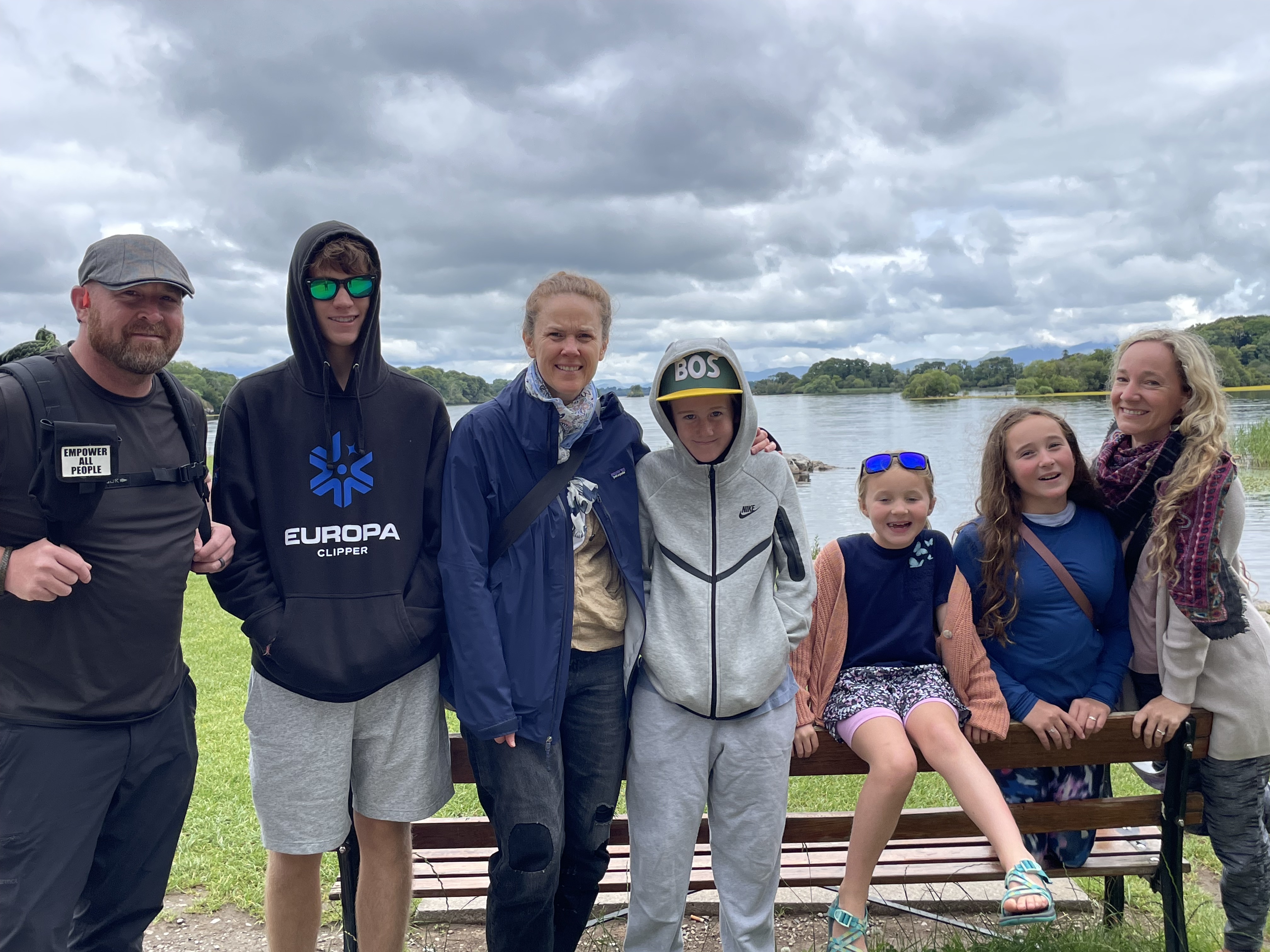
Upon arriving, we discovered that Lough Leane translates to “Lake of Learning.”
What we found: a crumbling monastery, a silent stone cross, and—most unexpectedly—a quiet thread connecting this sacred site to Washington, D.C., our former hometown.
Departure from Ross Castle
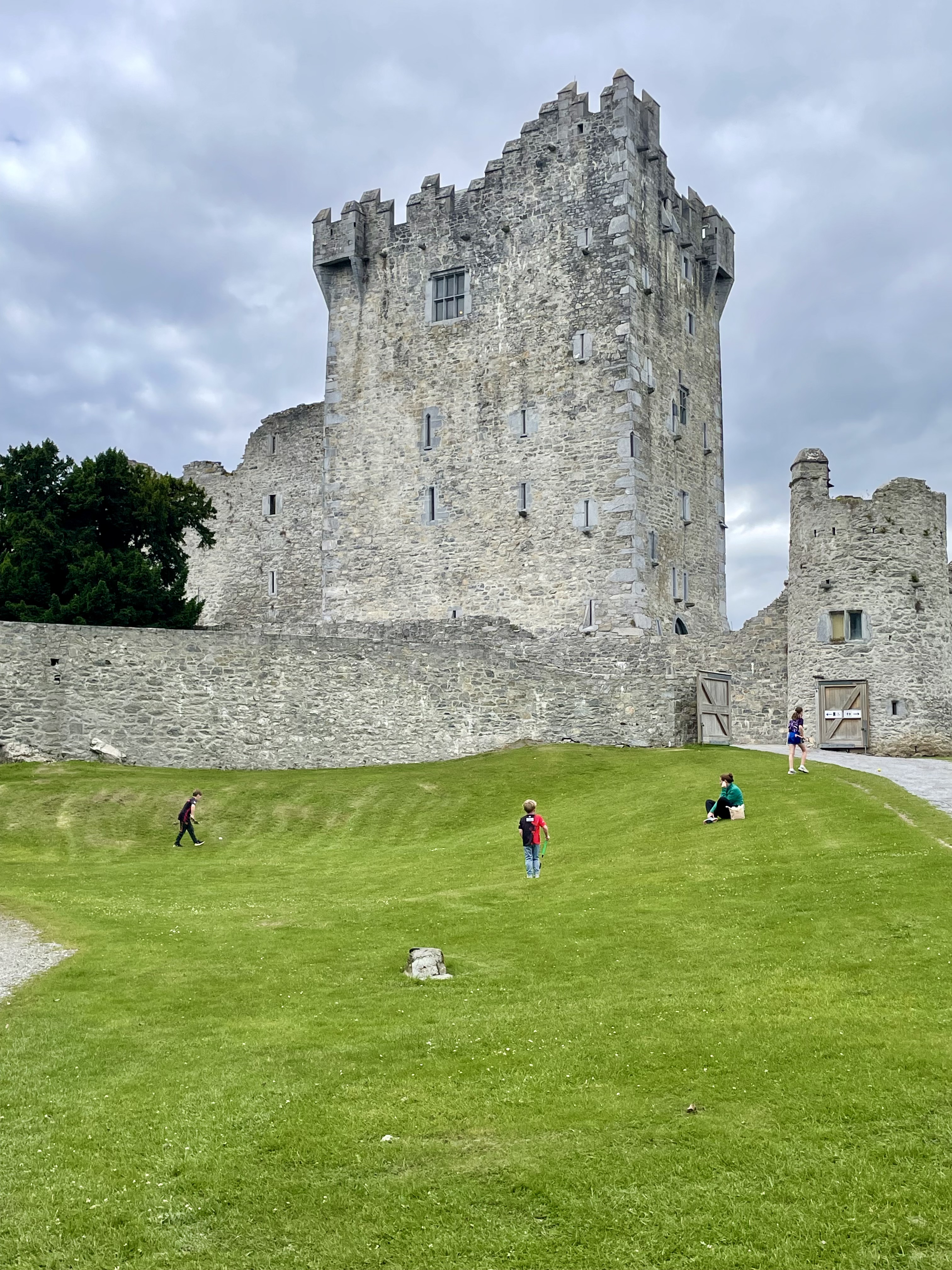
We began our journey at the shores of Ross Castle, a 15th-century stronghold once ruled by the O’Donoghue clan, fierce Gaelic chieftains who controlled the surrounding lands. Think of the O’Donoghues as the OG Irish dynasty (before the British arrived).
Around the castle, local children practiced hurling, an ancient Irish sport that appears to combine lacrosse, field hockey, baseball, football, rugby and chaos in equal measure.
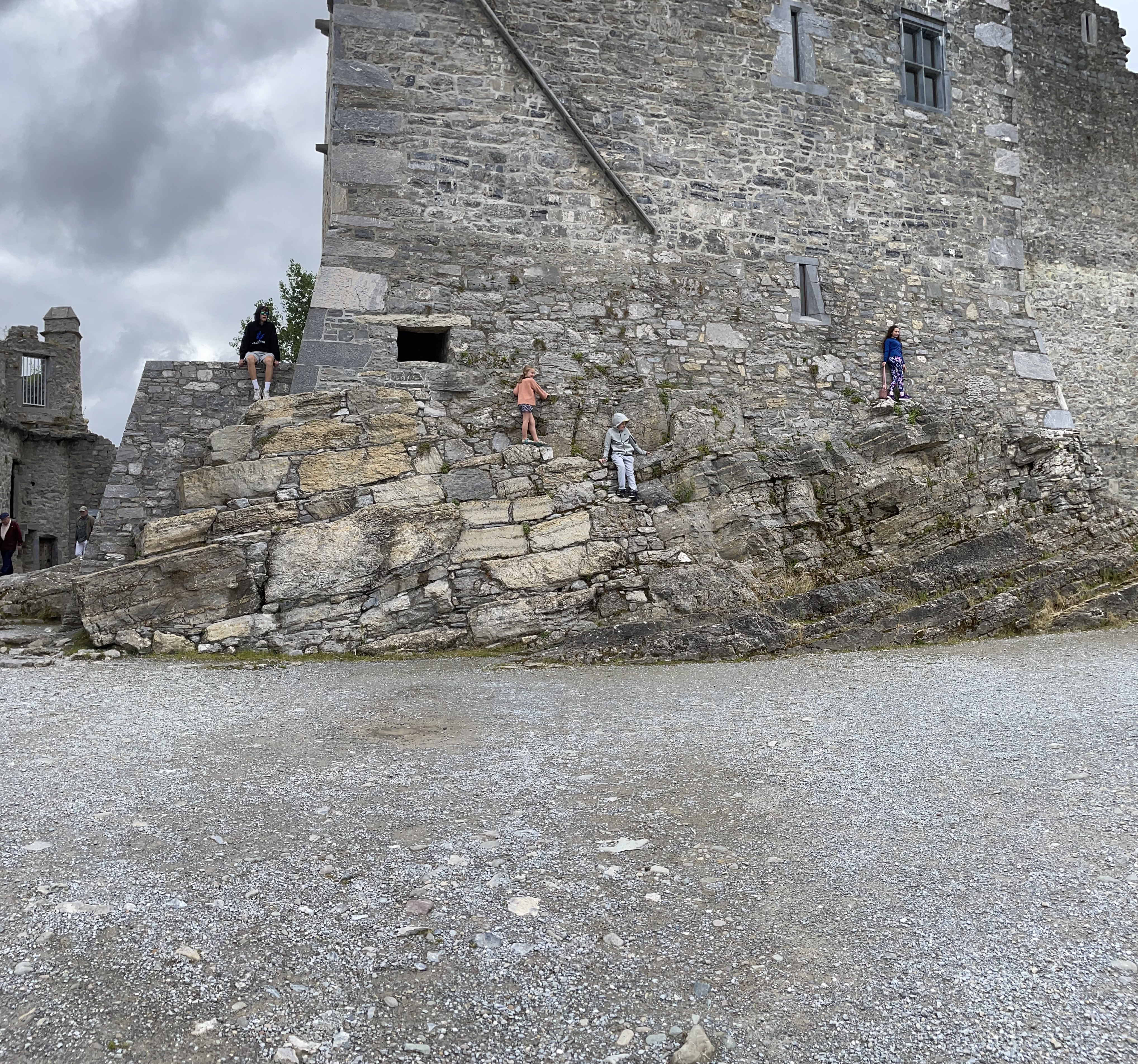
Our kids scrambled to scale the stone walls.
Arriving at Innisfallen
A short boat ride across Lough Leane brings you to Innisfallen. From the moment your feet hit the shore, you are in a place of peace, quiet, tranquility … and lots of rock skipping.
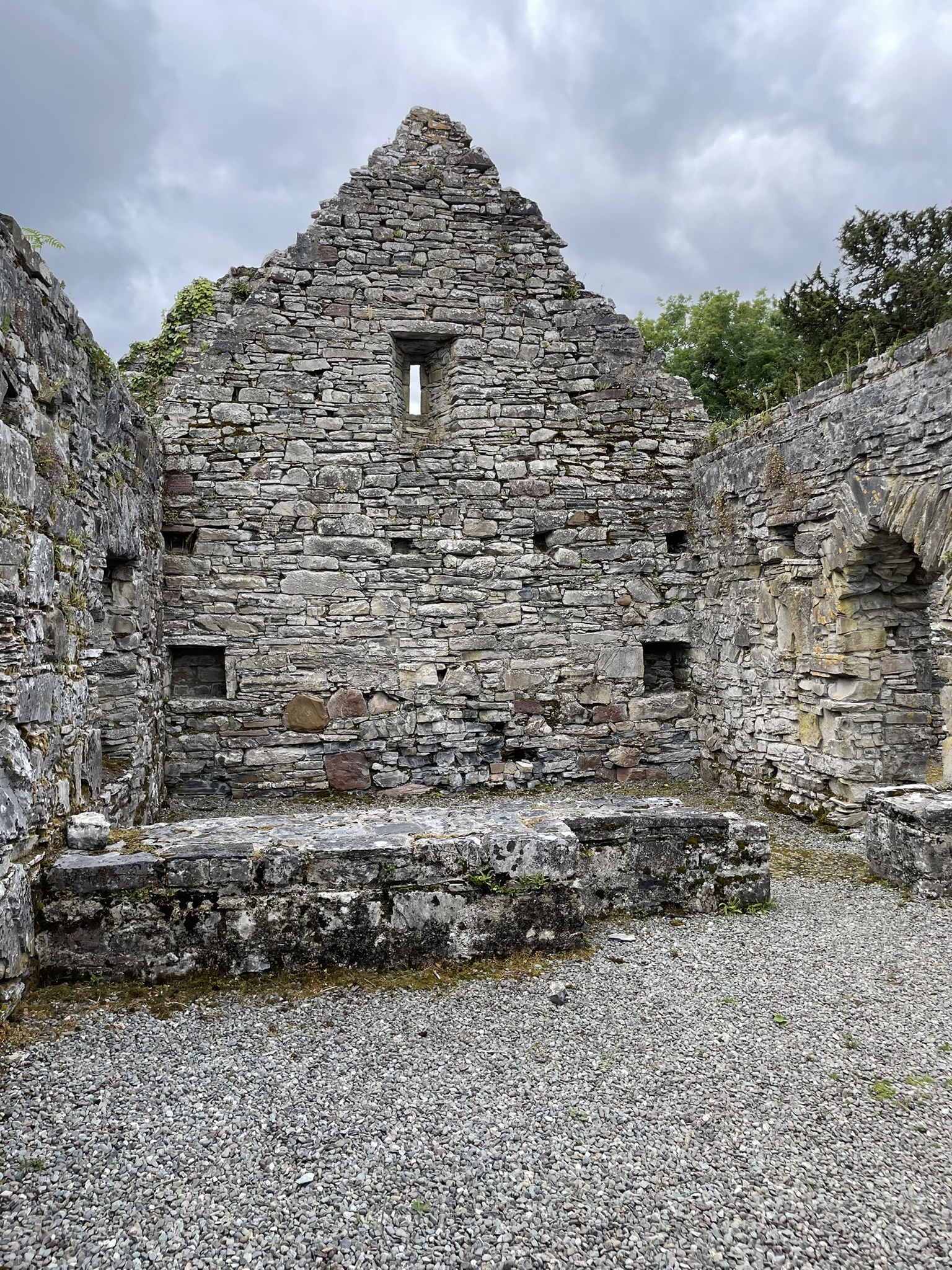
The monastery was founded in the 7th century by Finian Lobhar (St. Finian the Leper). Others argue it was founded by Finan Cam, or “St. Finan the Crooked.” Either way, Finian or Finan, Leper or Crooked, Innisfallen is where the Annals of Innisfallen—a vital chronicle of medieval Irish history–was written.
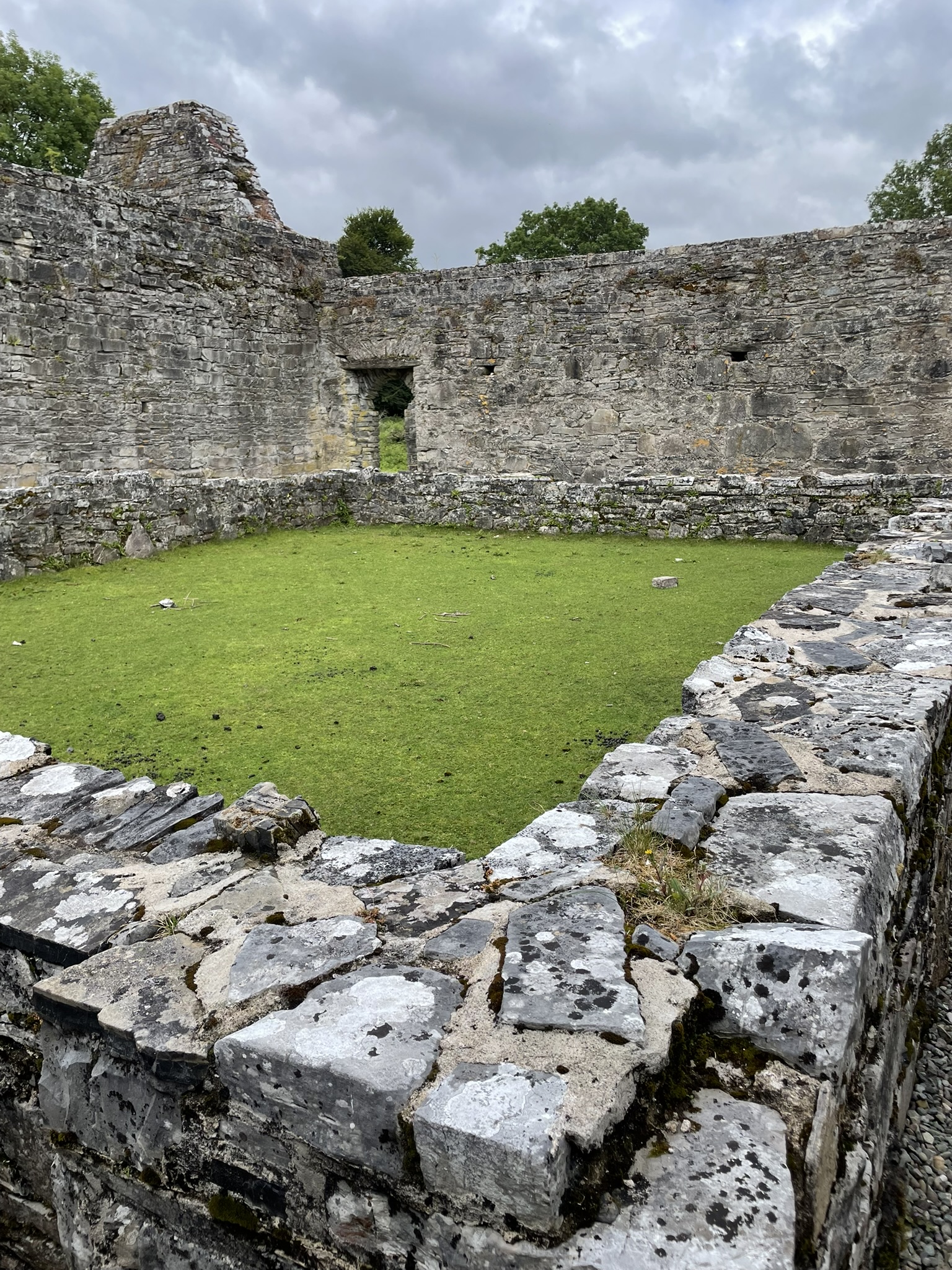
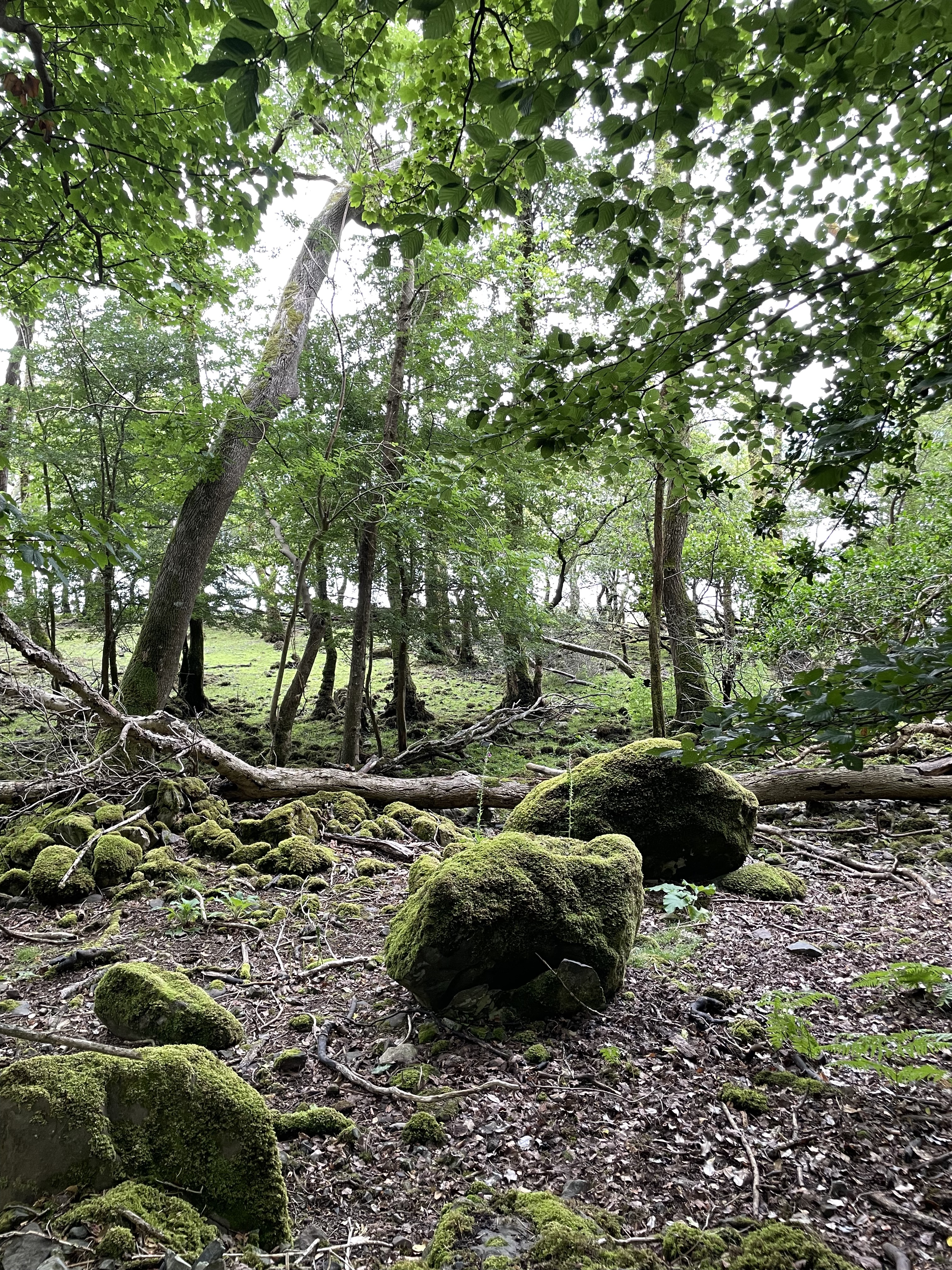
We wandered the ruins and touched moss-covered stones.
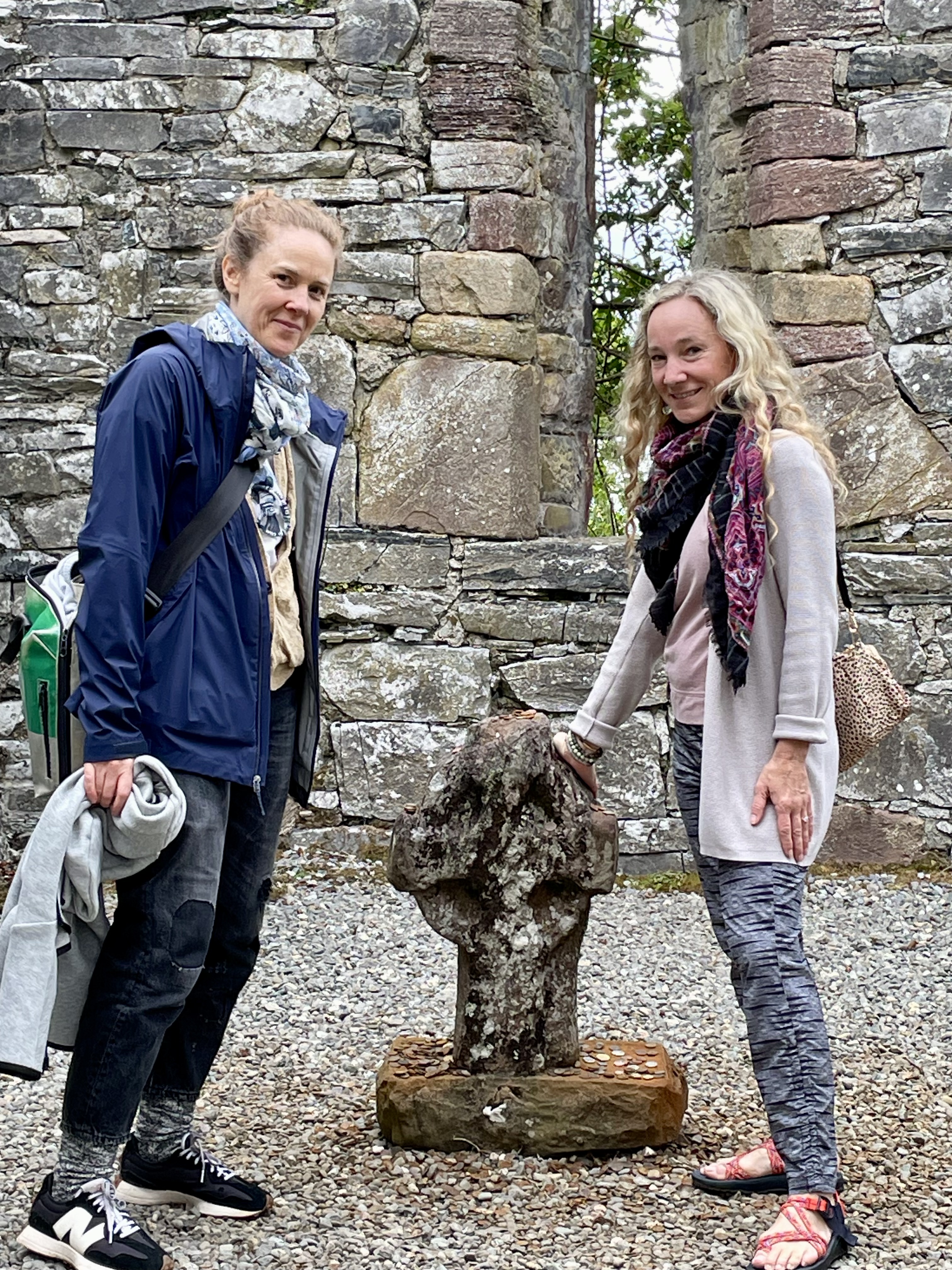
We also paused at a weather-worn stone cross that had once rested underwater. Now upright inside the chapel, it stands humble, haunting and oddly hopeful.
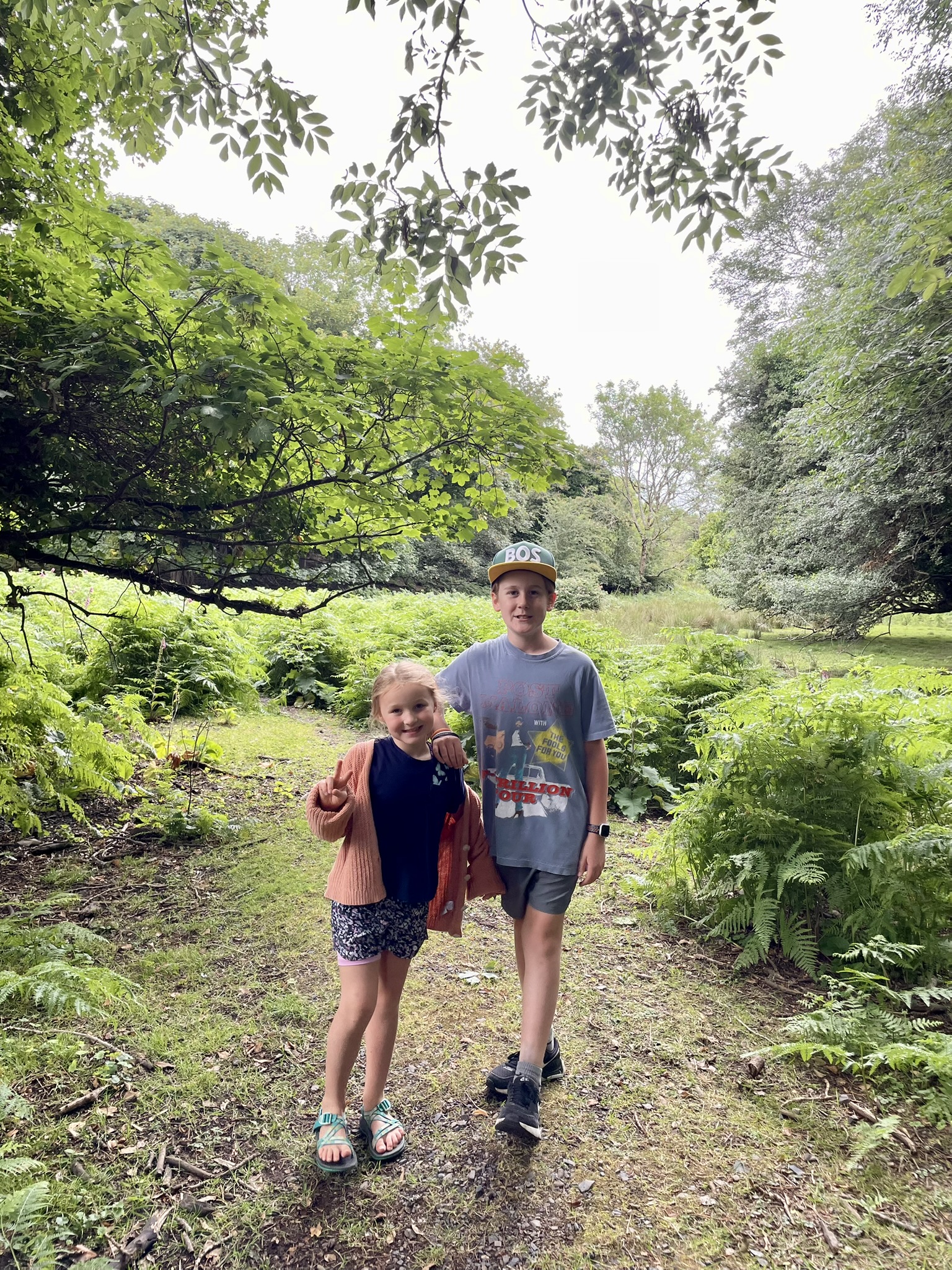
From Killarney to Boston: Monks & Migrants
Innisfallen helped shape Ireland’s early Christian identity. Its monastic roots, grounded in learning and faith, laid the cultural foundation for generations of Irish Catholics. In the 19th century, many Irish immigrants came to the U.S. from Kerry and the broader southwest. They brought their Catholic heritage with them—establishing parishes, schools, and entire communities across Boston, Philadelphia, New York and beyond.
And the D.C. connection?
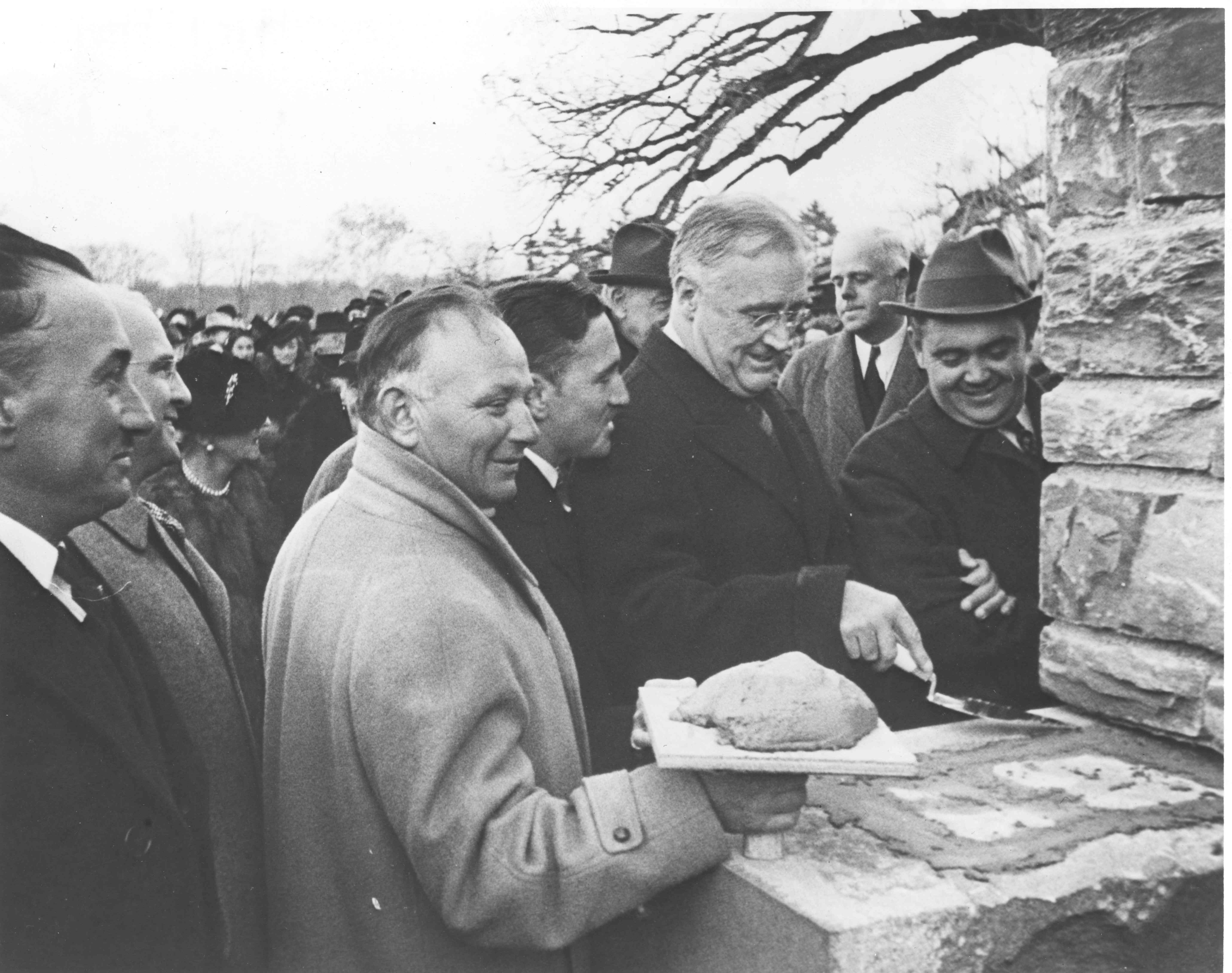
After returning to land, we learned that John McShain—the Philadelphia builder dubbed The Man Who Built Washington—purchased Innisfallen Island and subsequently donated it to the Irish government in 1972. With the land gifted back to the state, Innisfallen was officially folded into Killarney National Park, protected and preserved for future generations.
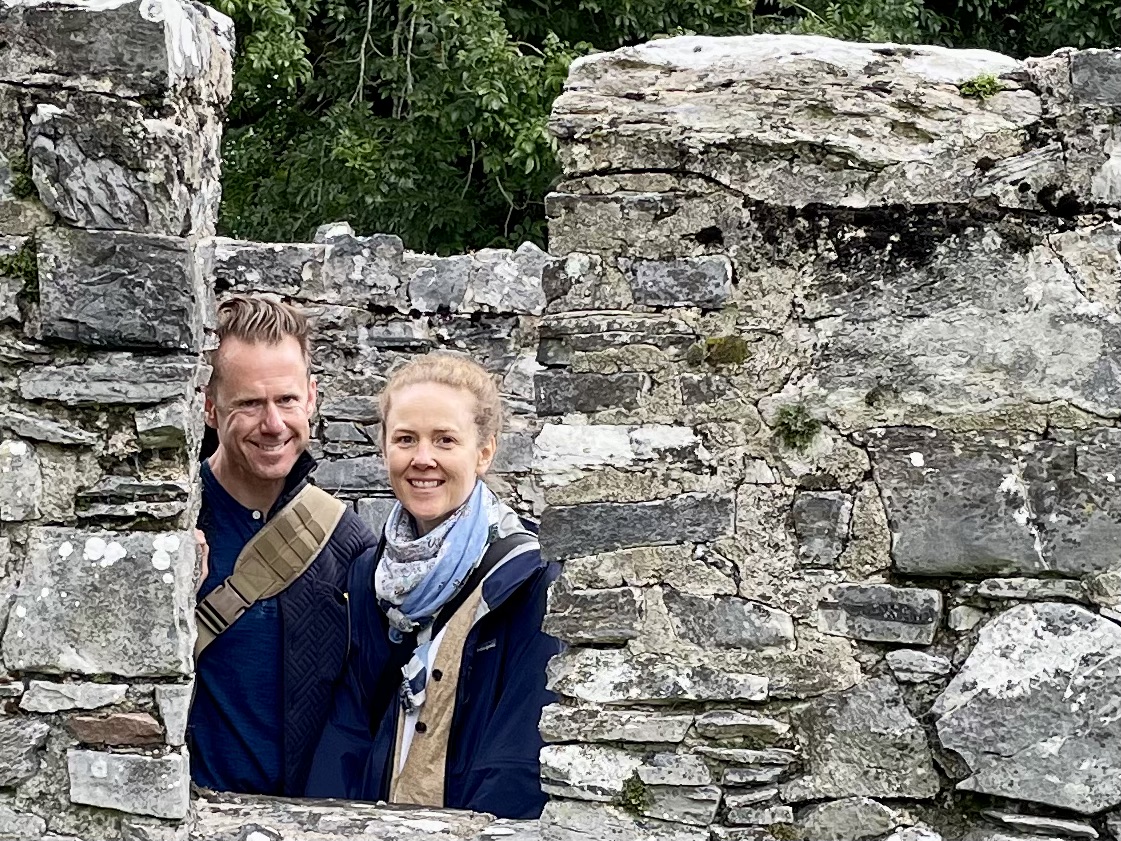
For the Dupuy-Haugland Clan, Innisfallen was a reminder that history isn’t confined to museums or books—it exists in wild places. And sometimes, it follows you all the way from County Kerry to Washington, D.C. … or Boston.


You left out the part about how we (Alexander) stole all the butter.
LikeLike